It appears many people are still in doubt as to the trustiworthiness or authenticity of Irish annalistic soruces. Many people believe entries are made up, or incorrect, or lies of some sort, and that any Medieval annal doesn't really go as far back as it claims to. Unfounded skepticism is an obstruction to the truth: at least for the Irish annals we'll examine here, there is evidence that events were faithfully recorded stretching back, at minimum, 4500 years.
The Annals of the Four Masters is probably the greatest Irish annal, compiled in the 1620-30s and supposedly a collection of all the various annals floating around Ireland at that time brought into a single work. It begins at the biblical deluge, and ends in 1616 AD. The Four Masters, following medieval tradition, break history into the Age of the World Anno Mundi, beginning at 5200 BC, and the Age of Christ, Anno Domini, beginning at 0 AD.
What follows will be a list of entries into the Annals of the Four Masters, along with the modern scientifically-determined events that correspond to the entries:
2380 B.C.
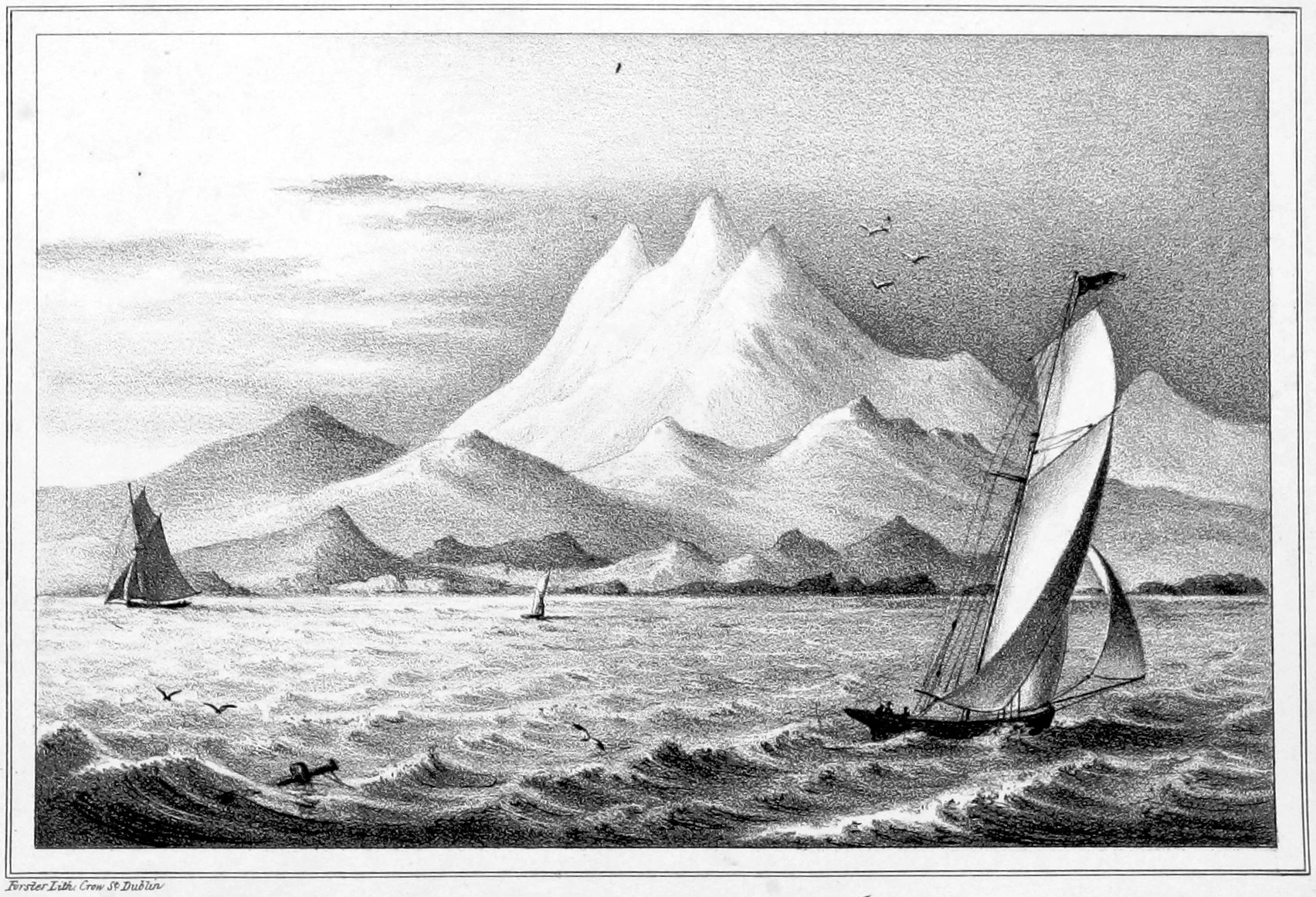
The Hekla-4 volcano in Iceland erupted, spewing ash into the sky to block the sun for much of the world. In 2024 this eruption was dated to 2375 B.C. +/- 8 years. The Annals record that 9,000 Partholonians died in one week in 2820 AM (2380 BC), and following this catastrophe, Ireland was a wasteland for thirty years until the arrival of the Nemedians. Presumably the eruption caused one or several years of cold climate and failed harvests.
Annals of the Four Masters, A.M. 2820Nine thousand of Parthalon’s people died in one week on Sean Mhagh Ealta Edair, namely, five thousand men, and four thousand women. Whence is named Taimhleacht Muintire Parthaloin. They had passed three hundred years in Ireland.
Ireland was thirty years waste till Neimhidh’s arrival.
2350 B.C.
The arrival of the Bell Beakers. A 2025 study put the advent of Bell Beaker populations in the British-Irish isles at 4300 B.P. or 2350 B.C. In that year in the Annals, we read,
Annals of the Four Masters, A.M. 2850Neimhidh came to Ireland… These were the four chieftains who were with him: Sdarn, Iarbhainel the Prophet, Fearghus Leithdheirg, and Ainninn. These were the four sons of Neimhidh.
The Nemedians, recall, were the first group in Ireland which remains genetically contiguous with the modern Irish people, through their descendents the Milesians. This is either a deep memory of the actual advent of Indo-European peoples into Ireland, or Irish history's greatest coincidence.
1544 B.C.
The first gold smelted in Ireland under the reign of King Tighearnmas (3580 - 3656 A.M.) (1620 - 1544 B.C.). Archeology confirms that advanced smelted goldwork first appeared in Ireland around 1700 BC. This was not the first gold in Ireland, but earlier gold was most likely either imported from Cornwall or harvested from river gravel as nuggets before being hammered into ornaments.
Annals of the Four Masters, A.M. 3656It was by Tighearnmas also that gold was first smelted in Ireland, in Foithre Airthir Liffe. It was Uchadan, an artificer of the Feara Cualann, that smelted it. It was by him that goblets and brooches were first covered with gold and silver in Ireland. It was by him that clothes were dyed purple, blue, and green.
1332 B.C.
In 3872 A.M., King Muinemón made the first gold necklaces. Shortly after, in 1318 BC / 3882 AM, King Fáeldergdóit made the first gold rings. Archeological finds designate a "second gold age" in Ireland beginning around 1200 BC, which showed a flourishing of new higher skills in goldsmithing than existed previously.
Annals of the Four Masters, A.M. 3872It was Muineamhon that first caused chains of gold to be worn on the necks of kings and chieftains in Ireland.
Annals of the Four Masters, A.M. 3882It was by the King Faildeargdoid that gold rings were first worn upon the hands of chieftains in Ireland.
c. 1000 B.C.
The volcano Hekla-3 erupted in Iceland again around 1000 B.C., once more spewing ash and dust into the sky, disrupting global weather patterns for, apparently, 18 years. The Annals record a "plague" in 1031 B.C. / 4069 A.M. which killed "a countless number of the men of Ireland" - perhaps this was caused or spurred by years of cold weather, poor harvests, and ashy atmosphere.
Annals of the Four Masters, A.M. 4069Sirna drew the men of Ireland to make battle against them to Moin Trogaidhe. As they were fighting the battle a plague was sent upon them, of which Lughair and Ceasarn perished, with their people, and a countless number of the men of Ireland along with them.
668 B.C.
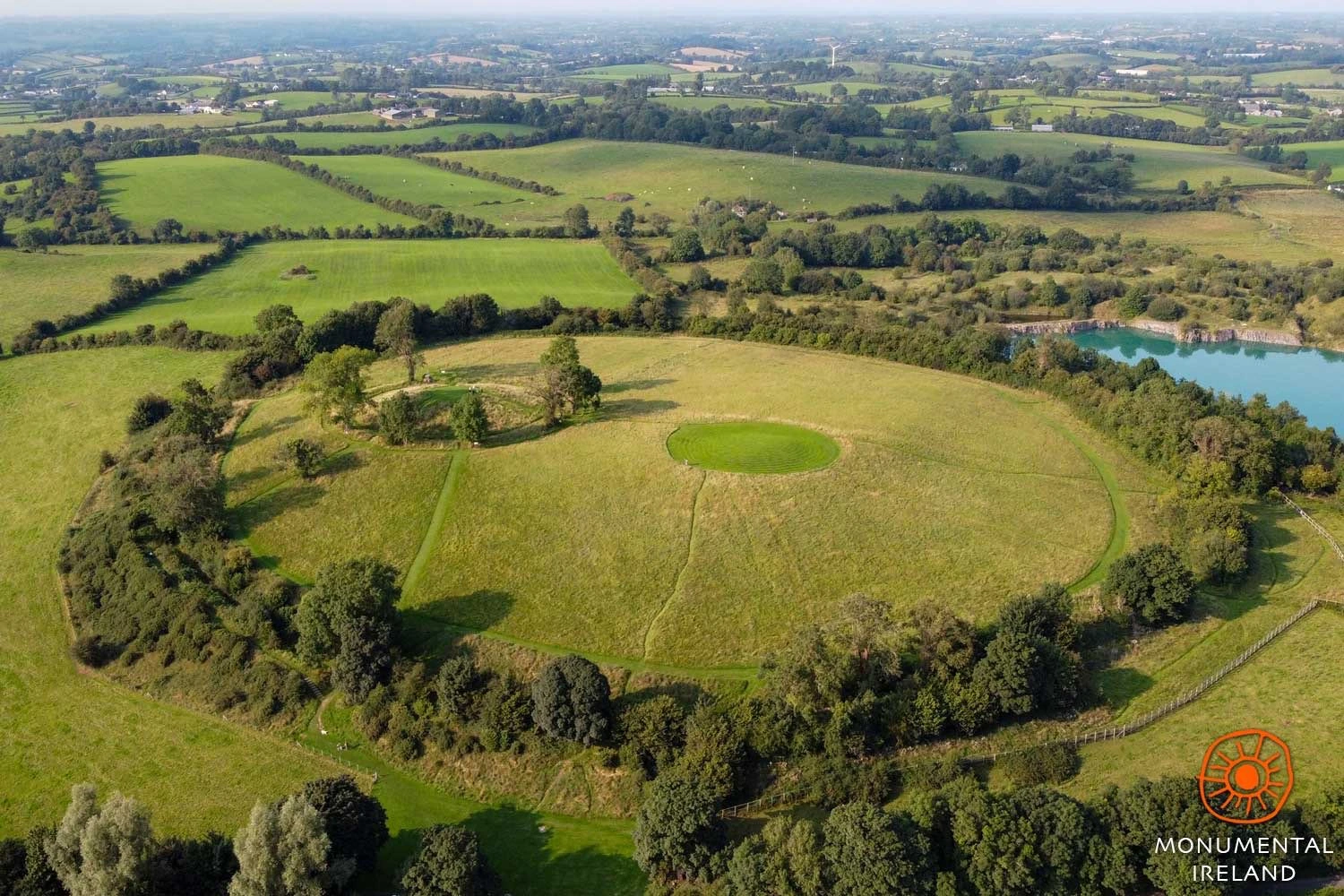
In 4532 A.M. Queen Macha took the sons of Dithorba under servitude and compelled them to construct the hillfort Emain Macha (modern Navan Fort).
Annals of the Four Masters, A.M. 4532She [Macha] afterwards proceeded alone into Connaught, and brought the sons of Dithorba with her in fetters to Ulster, by virtue of her strength, and placed them in great servitude, until they should erect the fort of Eamhain, that it might always be the chief city of Uladh.
Much of Emain Macha has recently been dated, generally to 800-400 BC.1 It was a long-running settlement complex with many stages of construction, but the oldest part is a penannular ditch dated to the 670s-660s B.C.2
142 B.C.
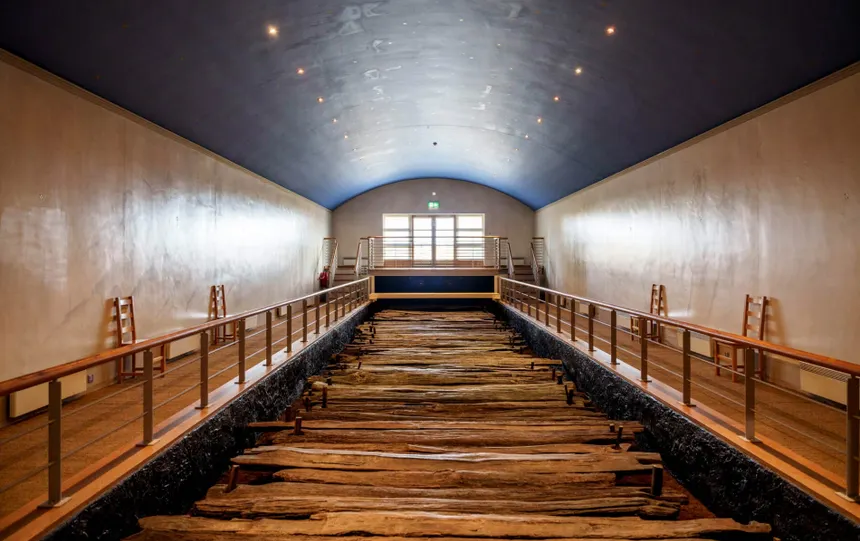
In 5058 A.M. we read that Eochaidh Feidhleach took soverignty of Ireland (not, in fact, over all Ireland, this is rather a common saying signifying the kingship of Tara in Meath), until his death in 5069 A.M. (116 B.C.). After this, his brother Eochaid Airem took the throne at Tara. Separately, in the mythological Tochmarc Étaíne, we read that this Eochaid Airem compelled Midir of Brí Léith to clear stones and build him a track across a significant bog in the kingdom.
Tochmarc Étaíne by Bergin & Best, 1938‘Verily indeed. Thou must take heed of him; it is a man of magic power that has come to thee, my son, lay heavy burdens on him.’ After that his opponent came to him, and Eochaid laid upon him the famous great tasks, namely to clear Meath of stones, to put rushes over Tethba, a causeway over Móin Lámraige, and a wood over Bréifne. Concerning which the poet uttered the followings staves:
These are the four things
that Eochaid Airem imposed
on many a manly-visaged throng
with many a shield and spear:
A causeway over Móin Lámraige
a wood over Bréifne, without difficulty
a clearing of stones from the hillocks of great Meath
and rushes over Tethba.
Certainly a bog in the center of Meath would have been trod before! We must imagine that this Móin Lámraige was a rural bog, somewhere in the midlands of Ireland, far from population centers. Archeologists discovered in 1984 the preserved remains of a massive trackway in County Longford built from planks which date to trees felled in 148 or 147 B.C., just before the listed reign of Eochaid Feidhleach.3 This Corlea Trackway is one of the largest and oldest trackways discovered in Europe; it would then have been built either by Eochaid Feidhleach, in which case we can assume the oral history of this track conflated Eochaid Airem with his elder brother, or the planks used for this track were stored for a number of years before being used by Eochaid Airem and Midir to build the track.
In fact, the identification of the Corlea trackway with the track built in the Tochmarc Étaíne is made stronger if Lámraige is in fact modern Laragh, Co. Longford. The trackway then would connect Lámraige with nearby Ráth Cruachan across the extensive Roscommon-Longford bogs along the Shannon, building a road from one power center to another. Brí Léith, Midir's home, is now Ardagh Hill in Co. Longford, a three hour walk from the Corlea track.
The incredible aspect of the this trackway is that due to its weight and size, it was poorly maintained and soon after 100 BC, it had sunk into the bog and become invisible. So the medieval scribes were faithfully describing a feature of the land which had been completely invisible for 1700 years.
208 B.C.
The NASA Jet Propulsion Lab lists the eruption of an "unnamed Icelandic" volcano in 208 B.C. or 4992 A.M. based on ice-core research, which caused climatic change all over the world from Europe to Manchuria. The Annals put the reign of King Breasal Boidhiobhadh from 209 - 199 B.C. or 4991 - 5001 A.M., and notes that sometime during this period there was a great death of cattle.
Annals of the Four Masters, A.M. 5001There was a great mortality of kine in Ireland in Breasal’s reign.
664 A.D.
There was a solar eclipse across Northern Ireland and England on May 1st, 664 A.D. (which famously occurred in conjunct with the Synod of Whitby in Northumbria). The Annals record an eclipse on the 3rd day of May in that year.
Annals of the Four Masters, A.D. 664An eclipse of the sun on the third day of May.
This date of May 3rd is two days late, but we can explain it for the following reason: the Four Masters derive this dating from Bede of England, who placed it on May 3rd; the eclipse occurred just prior to the Synod of Whitby and was taken by many as a divine sign, spurring the English nation to adhere to the Roman church; since the accuracy of the Roman calendar was directly in question at Whitby, and since a solar eclipse can only happen on a new moon, Bede adjusted the date to silently agree with the Roman lunar calendar. Other annals, namely the Annals of Ulster and of Tigernach, correctly list the eclipse on the kalends or 1st of May.
Annals of Ulster, A.D. 664Darkness on the Kalends 1st of May at the ninth hour, and in the same summer the sky seemed to be on fire.
1054 A.D.
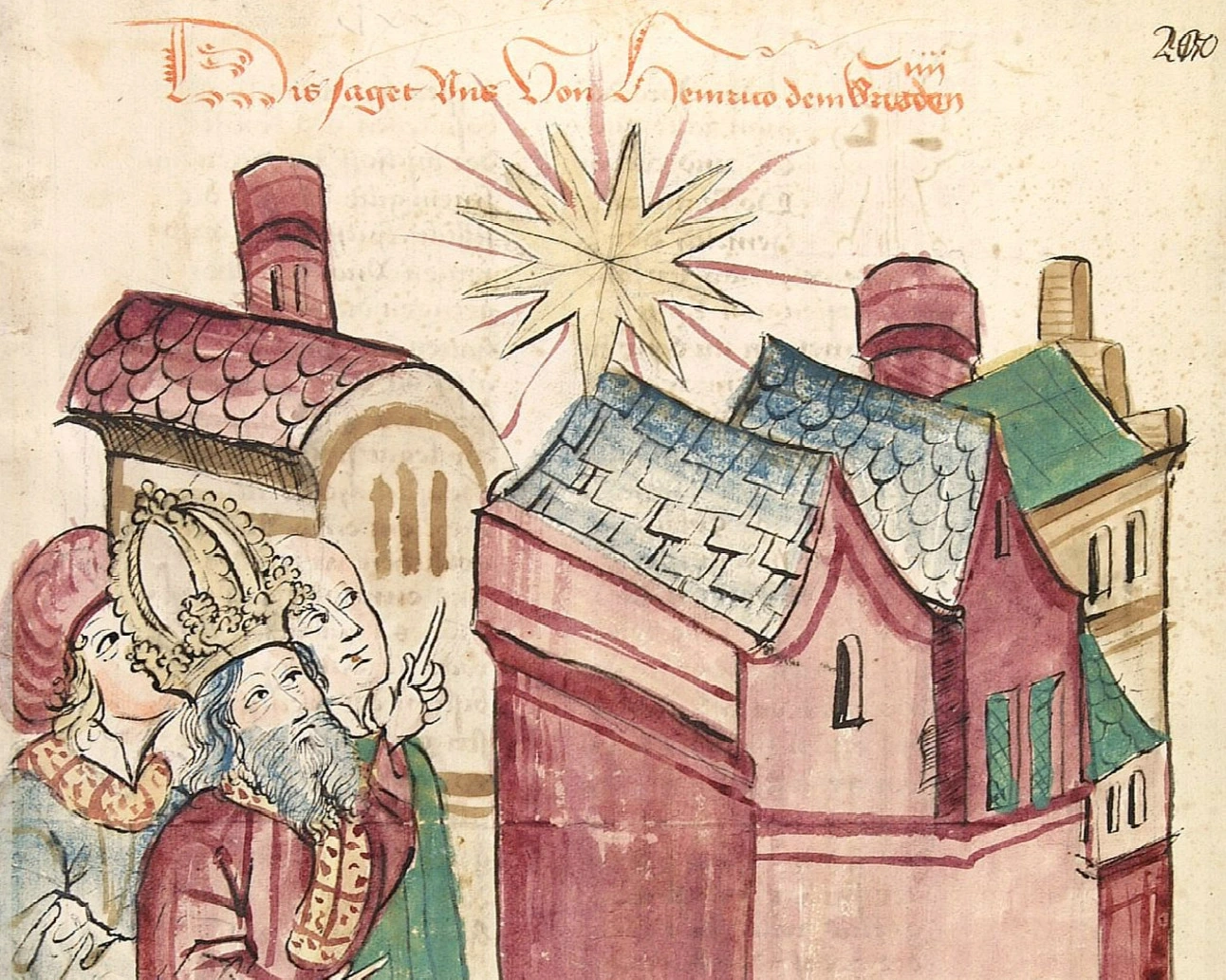
The famous Crab Supernova of 1054 A.D. which formed the Crab Nebula. This was widely observed and recorded, but the Annals of the Four Masters record what is apparently a description of the Apocalypse in highly poetic terms.
Annals of the Four Masters, A.D. 1054A belfry of fire was seen in the air over Ros-Deala, on the Sunday of the festival of George, for the space of five hours; innumerable black birds passing into and out of it, and one large bird in the middle of them; and the little birds went under his wings, when they went into the belfry. They came out, and raised up a greyhound, that was in the middle of the town, aloft in the air, and let it drop down again, so that it died immediately; and they took up three cloaks and two shirts, and let them drop down in the same manner. The wood on which these birds perched fell under them; and the oak tree upon which they perched shook with its roots in the earth.
This is considered to describe the coming of the Apocalypse translated into imagery with which an Irish monk would be familiar. For example, the black birds here are analogous to the locusts of Rev. 9:3, but also to the ravens and crows of the Morrígan, the pagan Irish spirit of war and death. The word for "belfry", cloictheach, is also the same as for "round-tower", giving us an image of a tall round shape in the sky, which matches to Rev. 9:1-2,
Revelations 9:1-2I saw a star that had fallen from the sky to the earth. It was given the key for the passage to the abyss. It opened the passage to the abyss, and smoke came up out of the passage like smoke from a huge furnace.
Round towers were furnished inside with wood, and when they caught fire, they quickly trapped their inhabitants and belched black smoke out of a small number of small windows: therefore the monks had an easy image for describing the "smoke from a huge furnace rising out of a shaft which leads to the abyss".
It should also be said that this "Ros-Deala" is most likely modern Rostalla in Co. Westmeath, which lies just two miles to the northeast of Durrow Abbey, the prolific Medieval monastic site which produced a great number of books. A monk at this Abbey who peered out over the eastern horizon on the morning of the supernova in July of 1054 A.D., would have seen the new star rising in the sky over Rostalla.
I will leave off this list in the late Medieval era, since no one's belief is strained by accurate records from this era. There are a number of astronomical observations in the annals between 500 A.D. and 1100 A.D. which can be mapped to observed phenomena.4 The more fantastical elements are those which exist in mythological history and which align with modern archeology, which reach back into periods which strain belief in the power of oral history.5
From Andy Halpin and Connor Newman, Ireland, an Oxford Archeological Guide, p. 96-97: "The fort is defined by a massive circular bank with internal fosse, about 290 m in diameter, enclosing the top of a small drumlin. Various dates (from Late Neolithic to Iron Age) have been advanced for its construction but the only independent evidence, until very recently, was a radiocarbon date of 766–398 bc for peat from the base of the fosse, extracted by pollen core. This suggested that the enclosure was built sometime before 400 bc . . . The first major structural feature (phase 2), dating from around the 8th century bc, can be interpreted as a type of henge consisting of a circle of large timber poles (evidenced by a ring of 34 large postholes), 35 m in diameter, encircled by a broad, shallow, penannular fosse opening to the east. Relatively little attention has been focused on this important ritual structure, which attests to ceremonial activity at Navan Fort from at least this period." More on Navan Fort. ↩︎
Dating Navan Fort was first performed by Dudley Waterman, and published posthumously by Christopher Lynn in Excavations at Navan Fort 1961–71 (1997). The chapter The Radiocarbon Chronology of the Navan Excavations can be found here. The earliest phase of construction is called Phase 3(i) at Site B, which consists of a penannular ditch and some pits, and which are discussed on p. 189. The penannular ditch gave two charcoal samples which date to 678 B.C. +/- 50 years, and to 665 B.C. +/- 75 years. ↩︎
The dating of this trackway is attested in Exploring Past People’s Interactions with Wetland Environments in Ireland by Aidan O'Sullivan, which itself cites Trackway excavations in the Mountdillon bogs, Co. Longford, 1985–1991 (1996) by Barry Raftery in Transactions of the Irish Archaeological Wetland Unit. 3. I have not been able to find this latter source online. ↩︎
For more, see An evaluation of astronomical observations in the Irish annals by McCarthy and Breen. ↩︎
For more on this topic, see The 'Prehistoric' Irish Annals: Fable or History? by Richard Warner in Archaeology Ireland, Vol. 4, No. 1 (Spring, 1990). ↩︎